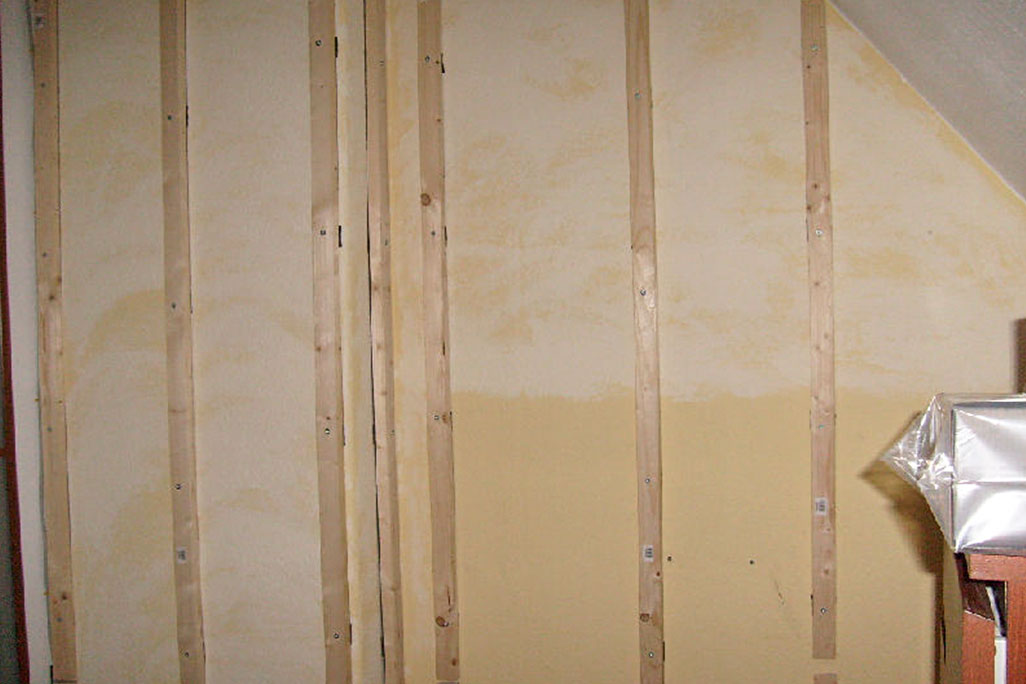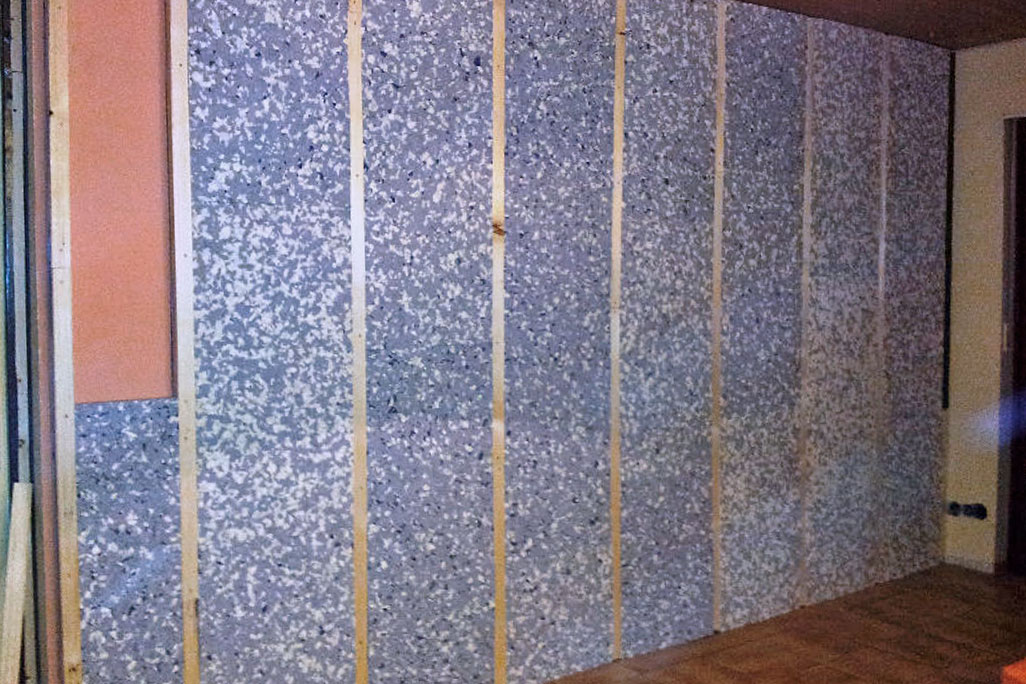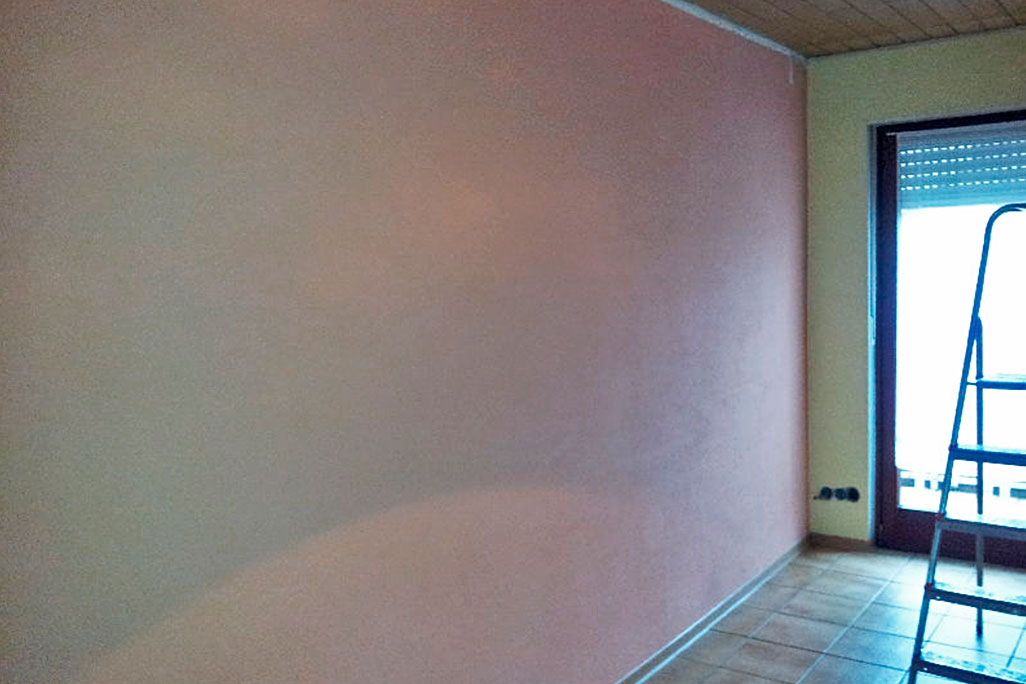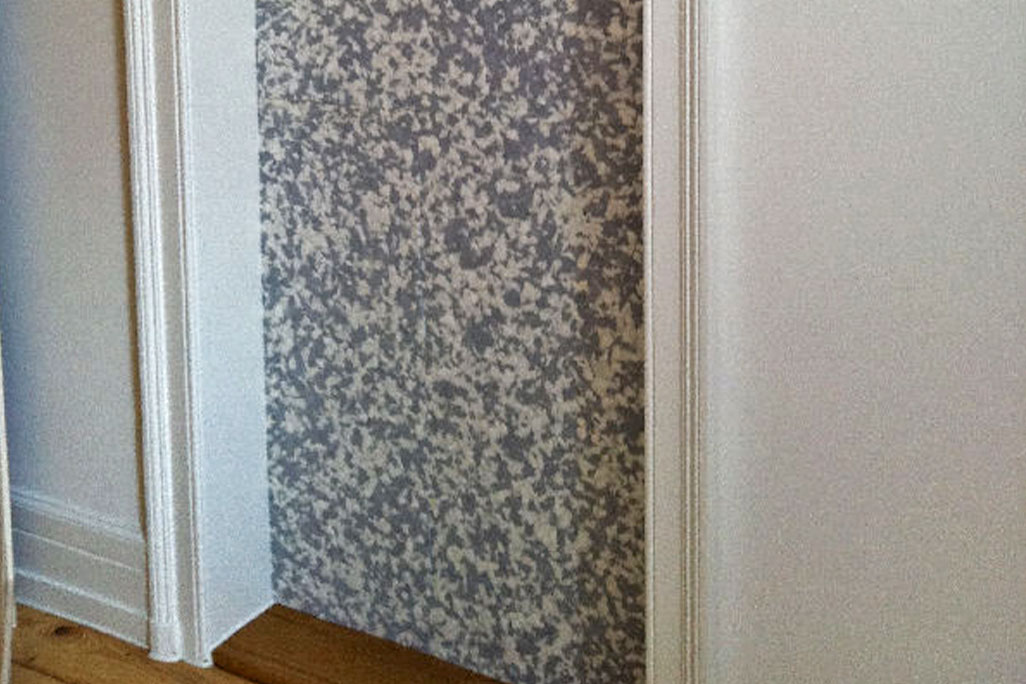
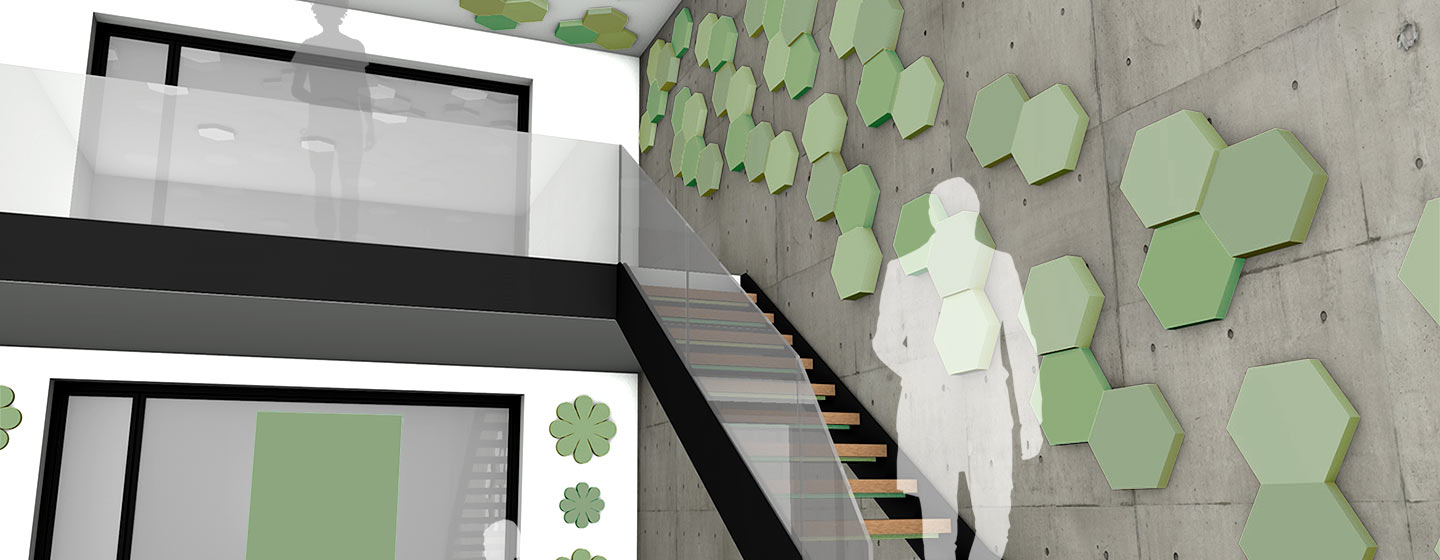
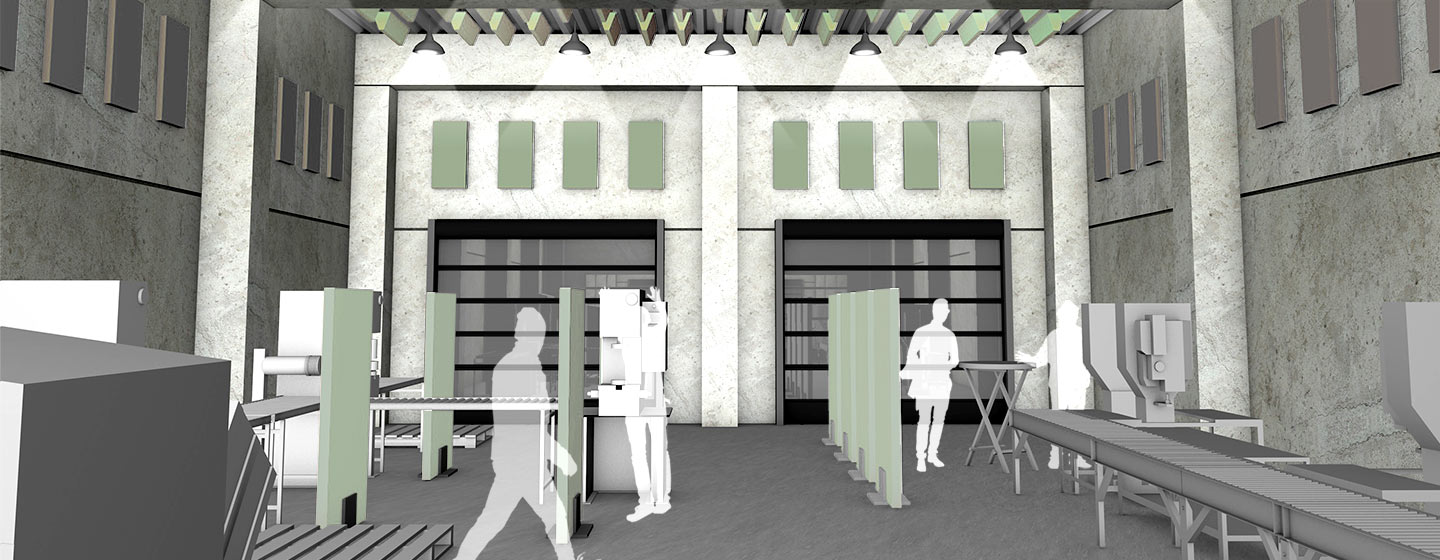

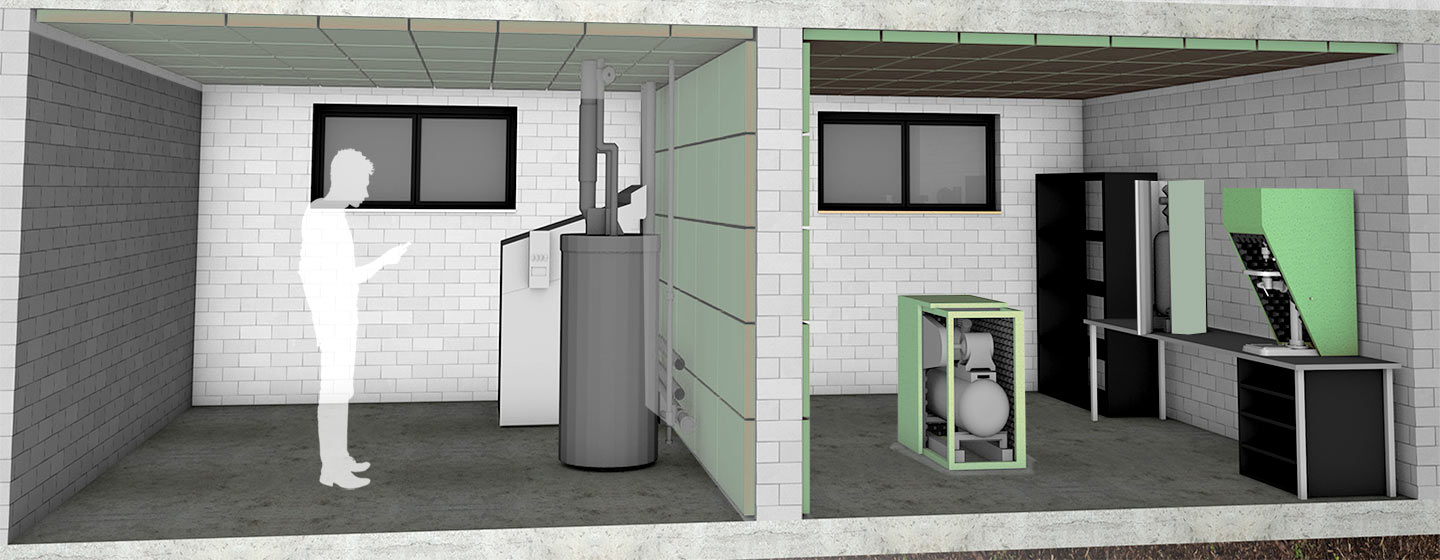
Our soundproofing material ensures the following in the area of partition walls and curtain walls:

  • an enhanced living quality in your home
  • a more relaxing atmosphere
  • protection against noise from inconsiderate neighbors
  • effective sound insulation of partition walls
  • diminished sound transmission through walls and ceiling
  • more peace and quiet in your home
soni 491 STL
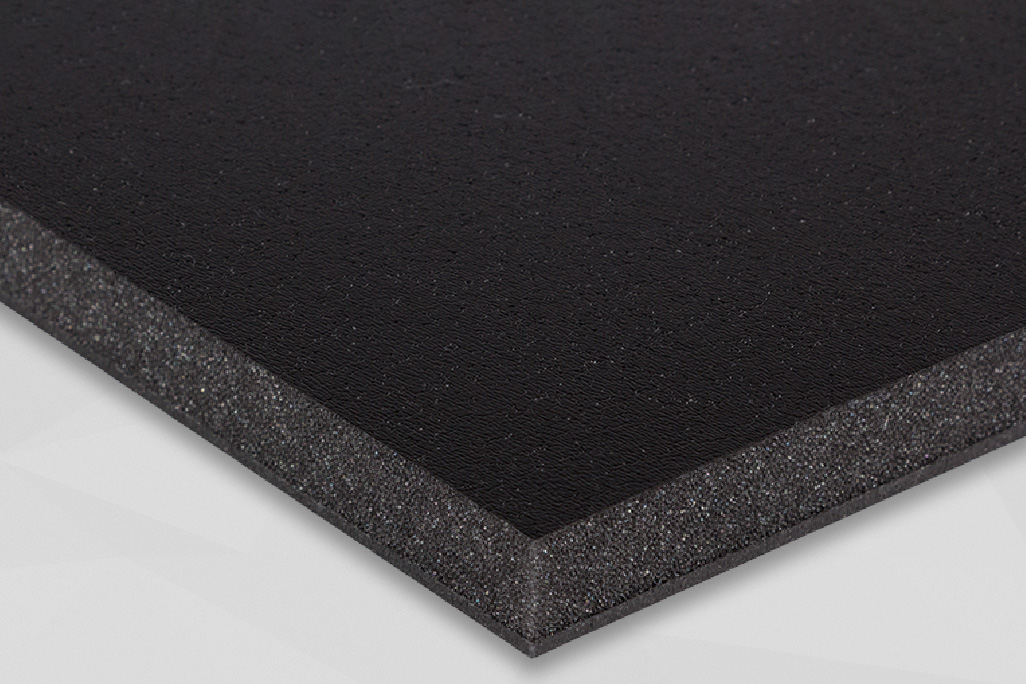
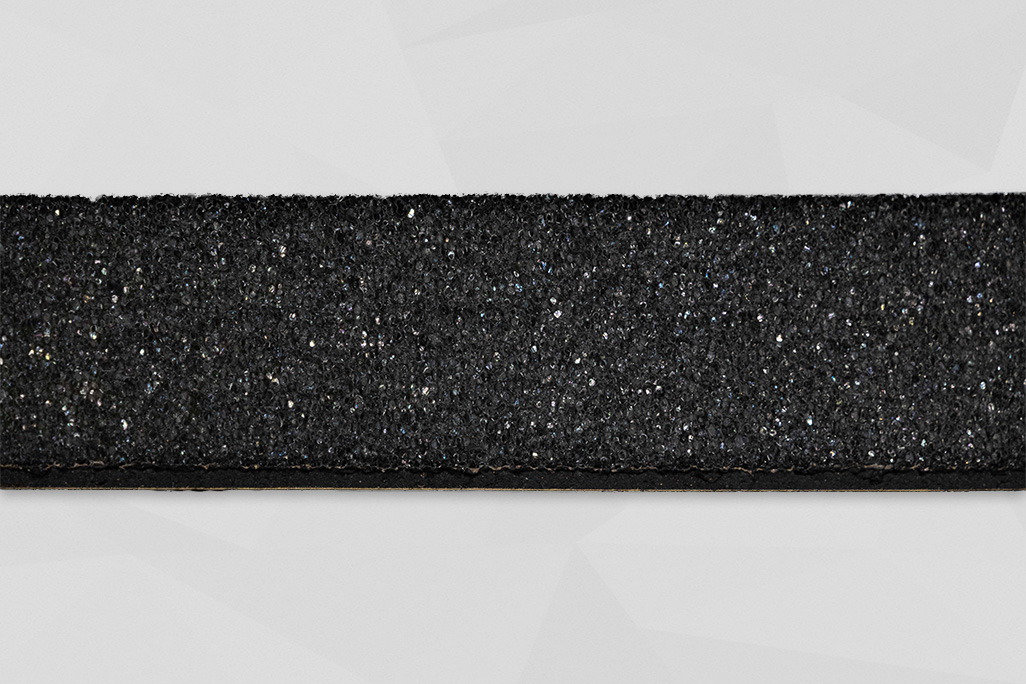
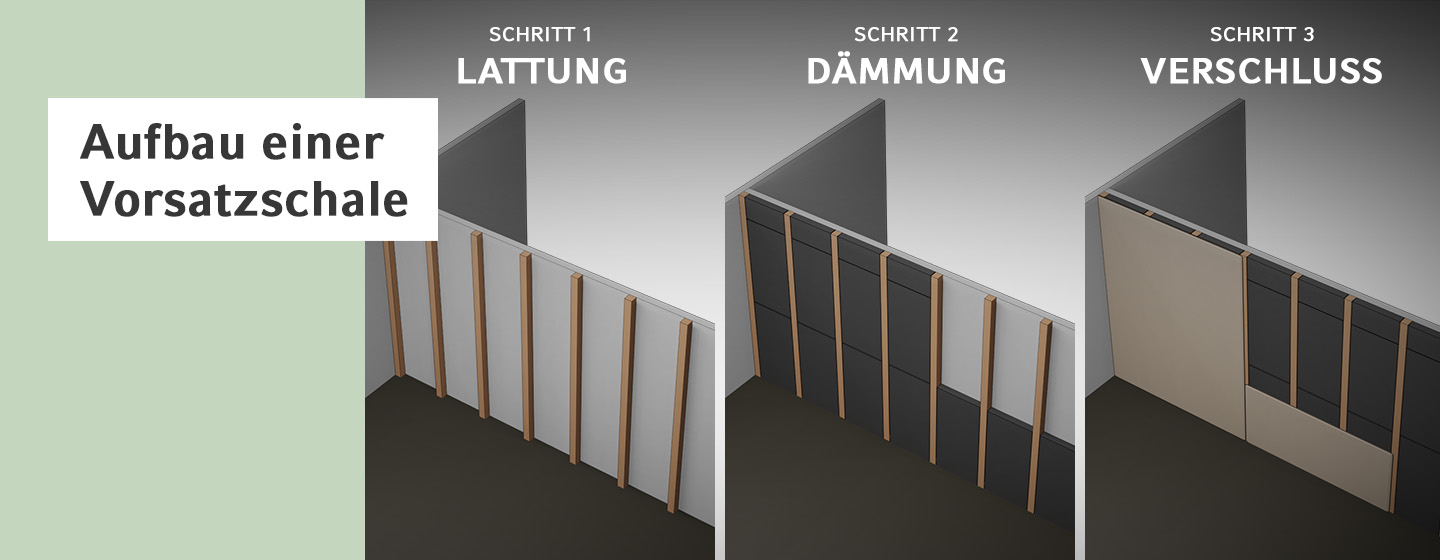
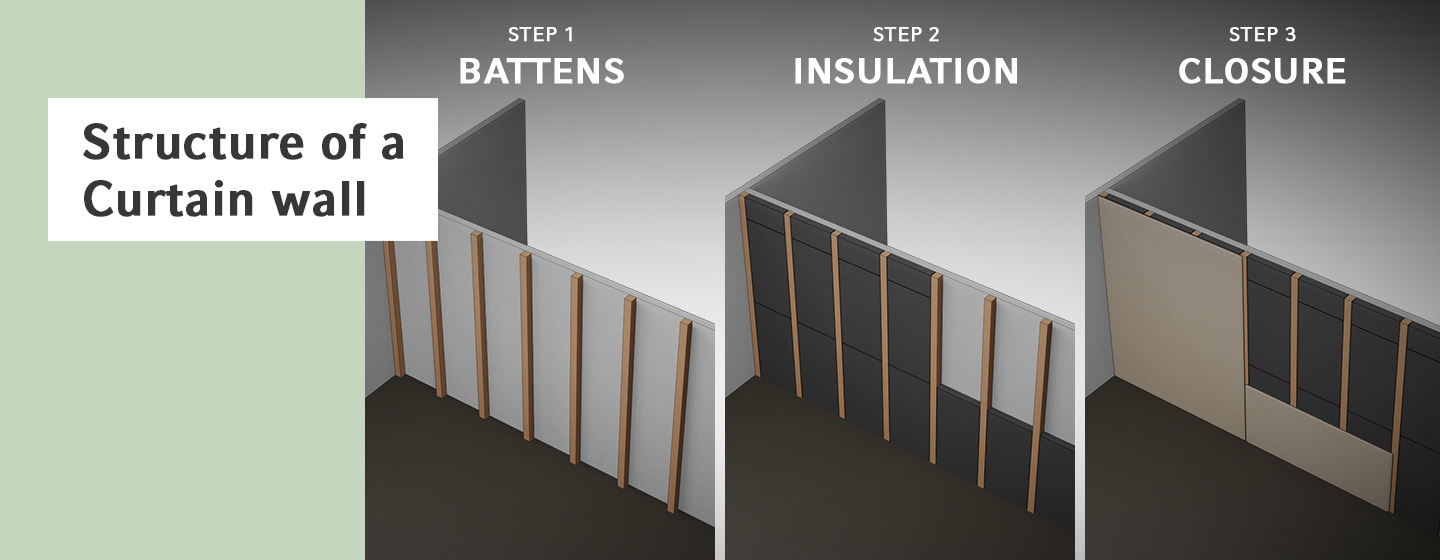
soni 491 STL – Sound insulation board with heavy foil for effective wall and ceiling insulation Combined sound insulation and sound absorption in one product Our soni 491 STL sound insulation board is a highly effective PUR foam-based sound insulation product that is additionally combined with a heavy bitumen foil. The acoustic foam with sound-permeable foil ensures optimum sound absorption, while the bitumen layer effectively insulates and blocks sound. This intelligent combination of materials combines both sound insulation and sound absorption properties in a single product – ideal for anyone who wants to effectively reduce noise and create a quieter environment. Areas of application – versatile, efficient and reliable soni 491 STL is used wherever noise and sound transmission needs to be reduced – for example: ✔ Wall insulation between neighbouring flats ✔ Partition walls or ceilings in apartment buildings ✔ Technical rooms, machine rooms or workshops ✔ Cellars, garages and house walls The sound insulation board is ideal for retrofitting existing walls or ceilings with sound insulation – for example, by constructing a facing shell or cladding partition walls. Tip for constructing a facing shell: A facing shell is a very effective way of significantly improving wall insulation between neighbouring properties. Here's how to do it: 1. Attach battens: Attach 30 mm or 50 mm thick wooden battens to the wall. Use our soni NBR sealing tape to insert an elastic layer between the wall and the battens. This prevents sound bridges. 2. Insert sound insulation boards: Fill the gaps with soni 491 STL to achieve both sound insulation and sound absorption. 3. Attach cladding: Screw plasterboard or chipboard onto the battens. 4. Decoupling & joint sealing: Separate the construction from the floor, ceiling and adjacent walls with a small gap and seal the joints with acrylate for maximum insulation performance. Tip: In our experience report ‘Neighbourhood / facing shell’, you will find a practical example of how soni 491 STL can significantly improve the sound insulation of a wall. Alternative with visible surface: soni COMPOSITE If plasterboard cladding is too costly for you, we recommend our soni COMPOSITE as an alternative. This material combines sound insulation and sound absorption like soni 491 STL, but has a decorative felt surface in various colours – perfect for visible areas. Advantages of soni 491 STL at a glance ✔ Combined sound and heat insulation ✔ Heavy bitumen foil for high sound insulation ✔ PUR foam for strong sound absorption ✔ Wipeable, micro-perforated surface ✔ Self-adhesive and easy to process ✔ Effective noise reduction between neighbouring flats ✔ Ideal for facing shells, wall insulation, ceiling cladding ✔ Easy installation with a cutter knife and adhesive surface

Content: 0.5 m² (€41.80* / 1 m²)

€20.90*
soni COMPOSITE
Color: black | Thickness: 32 mm
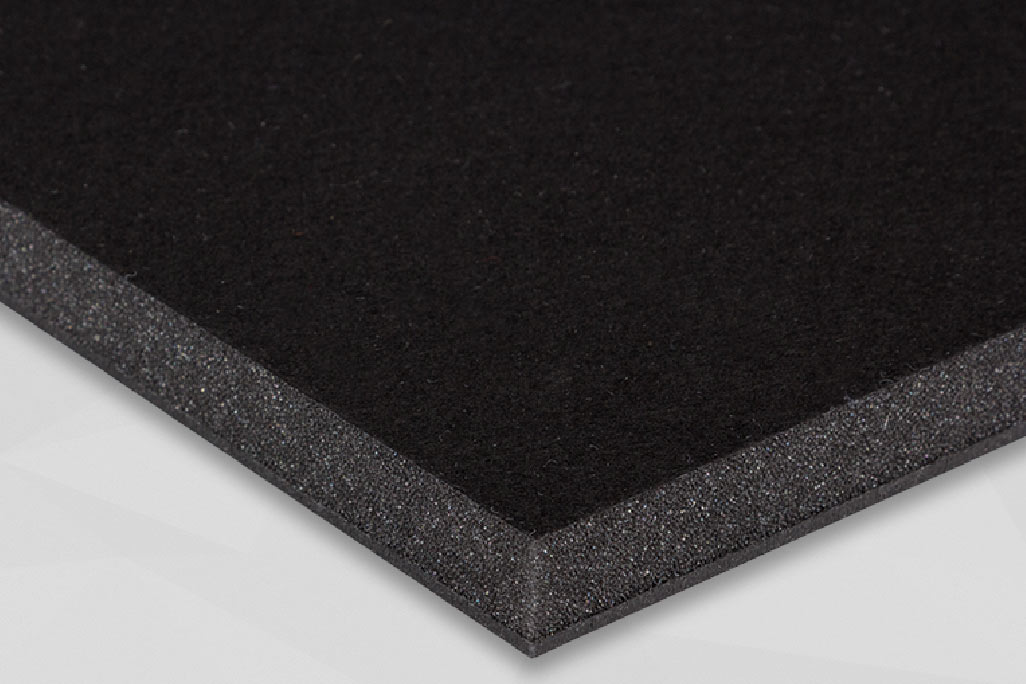
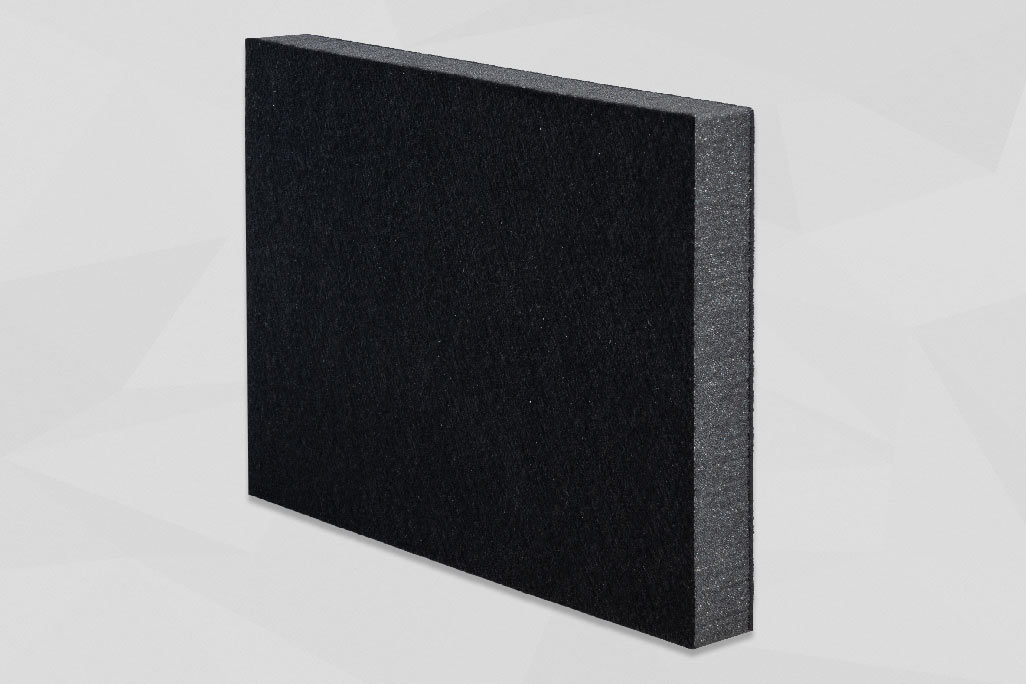
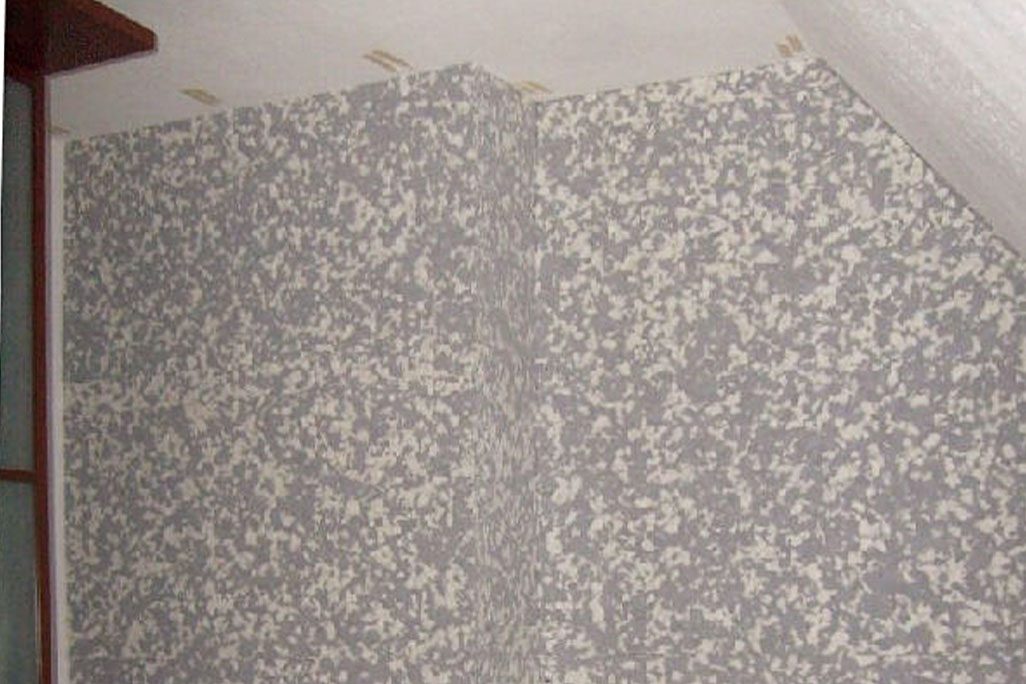
soni COMPOSITE sound insulation mat – effective sound insulation and sound absorption in one product The soni COMPOSITE sound insulation mat from soniflex is a highly effective combination of sound insulation and sound absorption. This acoustic product consists of a heavy plastic film (soni EVA) and high-quality acoustic foam with a decorative felt surface. This intelligent combination of materials reduces both airborne and structure-borne noise, resulting in a noticeable reduction in noise levels – ideal for use in living spaces, offices, workshops or technical facilities. Double effect – sound absorption & sound insulation While the soni EVA heavy-duty film reliably reduces sound penetration, the open-pored acoustic foam layer absorbs the sound within the room. This dampens the noise at its source and prevents it from spreading – a real advantage over single-layer materials. Typical areas of application: ✔ Partition walls & neighbouring walls in flats and offices ✔ Machine cladding & engine rooms ✔ Workshops & technical rooms ✔ Suspended ceilings & drywall constructions ✔ Music rooms & recording studios Use of soni COMPOSITE – versatile & effective The soni COMPOSITE sound insulation mat is particularly suitable for soundproofing walls and ceilings. Installed, for example, on the wall separating you from your neighbours or behind a facing shell, the material significantly reduces disturbing noises and ensures pleasant room acoustics. Thanks to its decorative felt surface, soni COMPOSITE is available in a range of colours – ideal when function and design are equally important. Easy processing & secure installation Processing soni COMPOSITE is straightforward and does not require any special tools: ✔ The mat can be cut to size precisely using a craft knife or scissors. ✔ The self-adhesive backing serves as an installation aid – however, mechanical fastening (e.g. screws, press studs or strips) is recommended for permanent attachment,     especially on vertical surfaces or for ceiling installation. ✔ Ensure that the substrate is dry, dust-free and smooth to ensure optimum adhesion. If necessary, you can cut soni COMPOSITE to the desired size with a craft knife. The self-adhesive backing serves as an installation aid. Tip: To create a clean finish at the joints, you can cover them with a wooden strip (8–10 cm wide) – this ensures a neat appearance and provides additional support. Safety & quality – tested for professional use soni COMPOSITE materials are age-resistant, moisture-resistant and free of fibres that are harmful to health. This makes this sound insulation mat a durable and safe solution for effective noise protection in both private and commercial areas.

Content: 0.5 m² (€68.40* / 1 m²)

€34.20*
soni NBR sealing tape
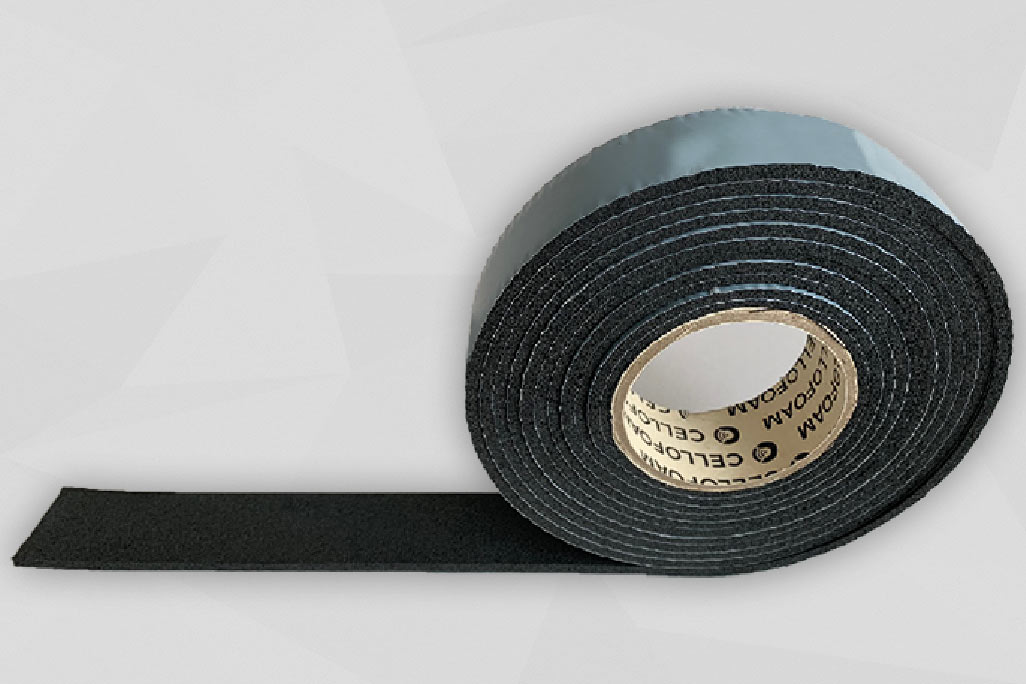
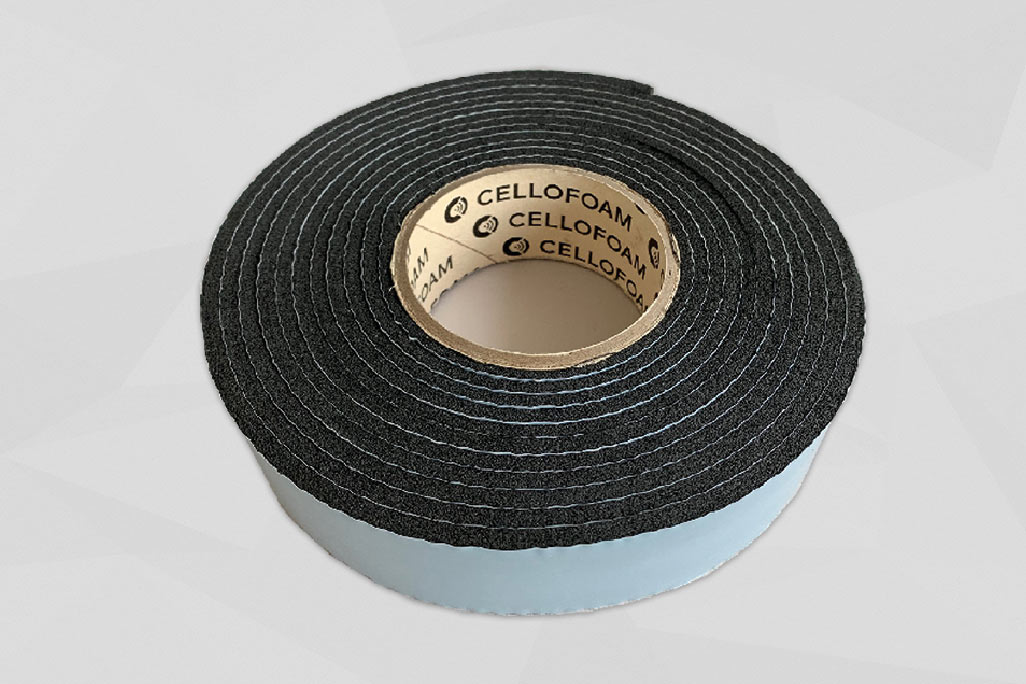
Order your sealing tape from soniflex Our sealing tape is one of various products that can be used for sealing off specific areas or decoupling different elements from each other: an ideal and easy to use solution! soni NBR sealing tape is a closed-cell sealing material produced on the basis of NBR. Sealing tape from soniflex offers you a high level of safety, reliability and quality that you can rely on! Properties of soni NBR sealing tape The self-adhesive sealing tape is made of a closed-cell material and scores with a range of specific properties that make it particularly versatile to use. This sealing tape can withstand temperatures from -40 to +80 degrees and also offers a high level of safety and reliability. Thanks to its self-adhesive equipment, the application of soni NBR sealing tape is quick and easy. The high adhesive strength ensures a secure and reliable application. The sealing tape comes in 40 mm wide rolls and can be cut to the desired length with the appropriate tool. Each roll contains five meters of tape. The use of soni NBR sealing tape A typical application of soni NBR is in the construction of a curtain wall, where the tape is used to acoustically decouple the wooden lathing. As our product is suitable for contact with oils, e.g. engine oil, our sealing and decoupling tape has also proven its effectiveness and practical use in many technical areas, for instance in vehicles, machines, housings, hoods and other areas for many years now. What is more, our soni NBR is extremely resistant to deformation and wear, which makes it much more durable than other products in this field. The self-adhesive rear face makes installation fast and easy. Do you have any questions about our soni NBR sealing tape or other products from our soniflex shop? If so, please get in touch and we will be happy to help you.

Content: 5 m (€1.58* / 1 m)

€7.90*
soni PORTA
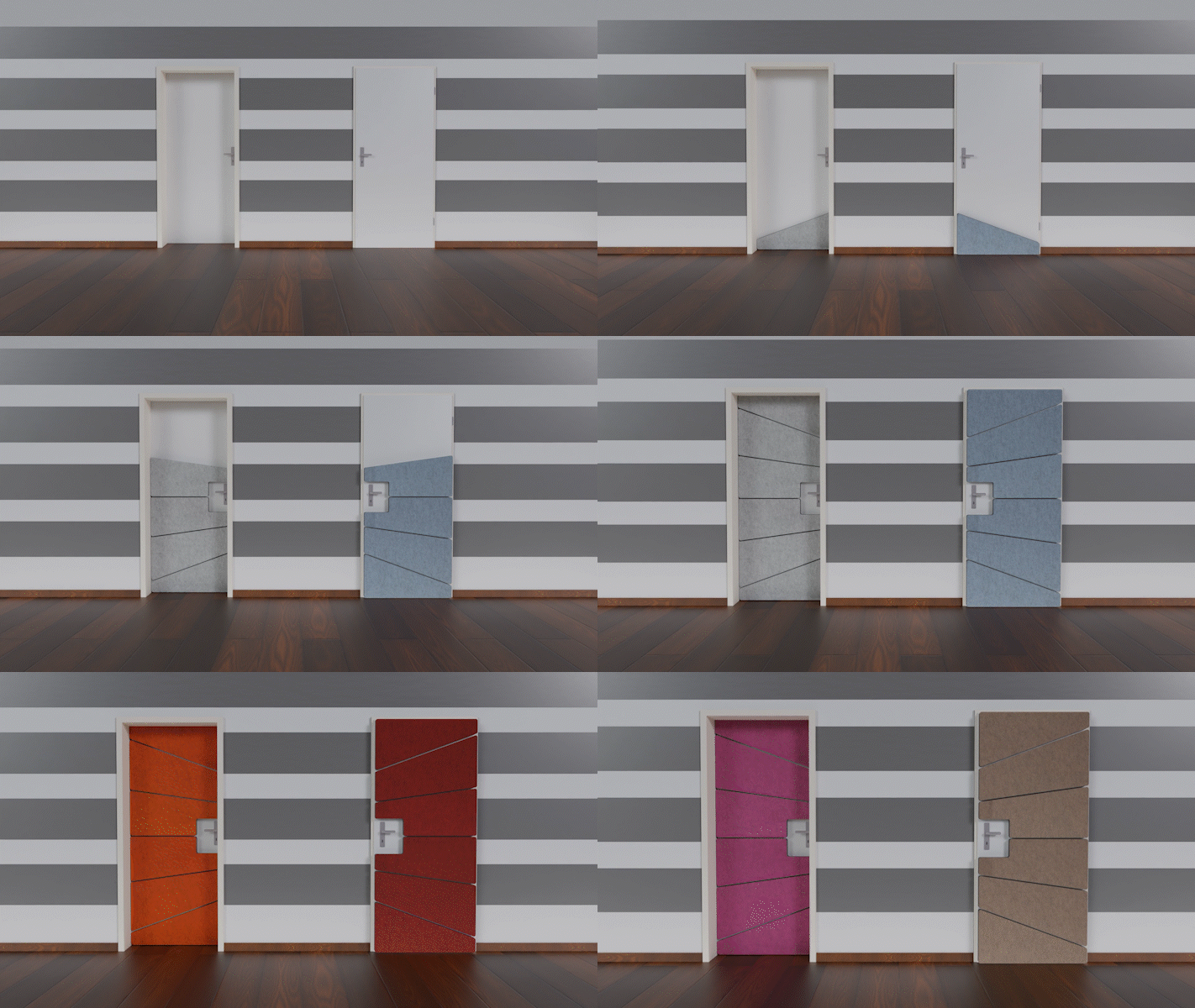
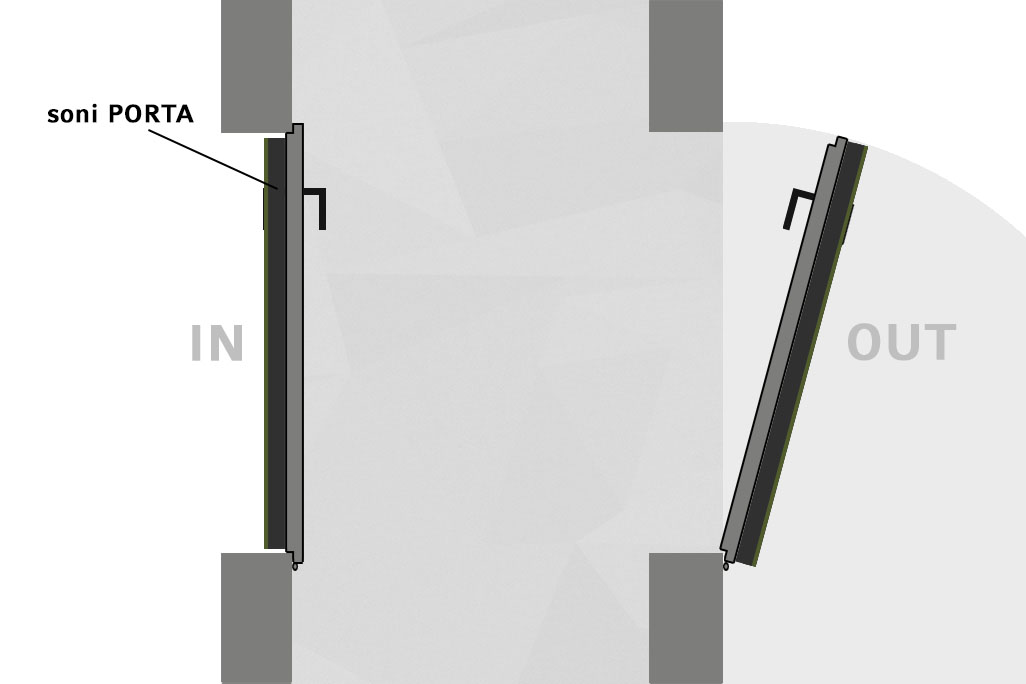
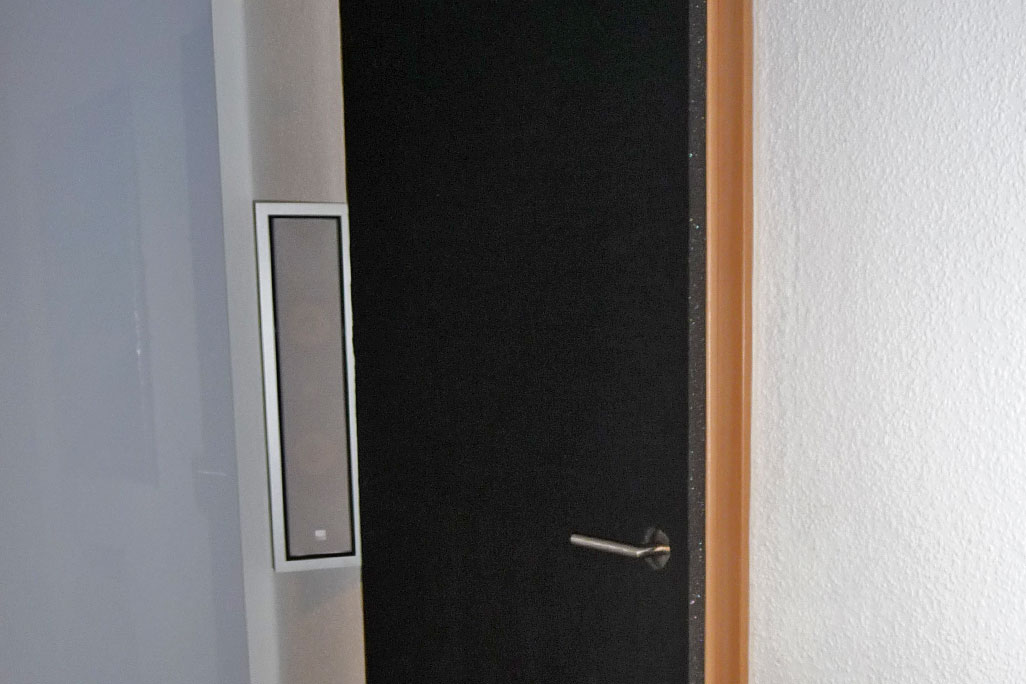
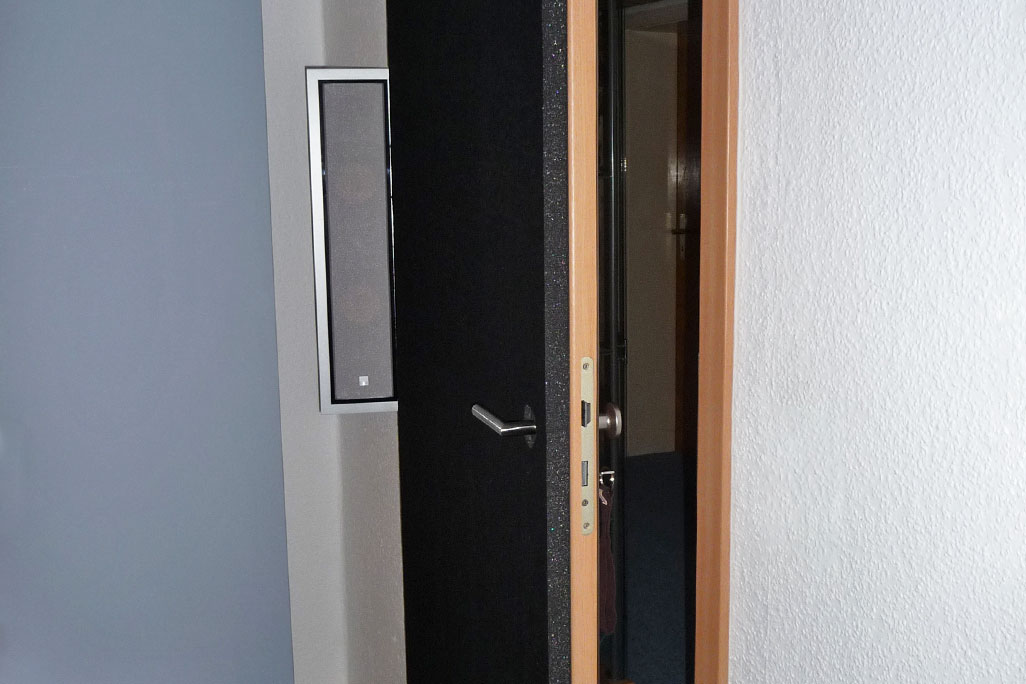
Effective and comfortable door insulation with soni PORTA Earsplittingly loud music from your teenager's room, bothersome noise from the hallway, loud phone conversations from the adjacent office, lack of discretion in treatment rooms - wherever closed doors are supposed to provide undisturbed quiet, our door insulation kit is the ideal solution for effective noise reduction.Our soni PORTA solution consists of six precisely fitting elements that form an attractive pattern and are simply glued to the door using the two included installation aids and our easy-to-understand installation instructions. Thanks to our unique, protected self-adhesive solution, you can remove soni PORTA again from smooth surfaces without leaving any residue, if necessary, for instance when moving out.Elegantly shaped cutouts for the door handle, on the left or right as needed, complete the sophisticated design.Depending on the application, the material has to be mounted either on the inside or on the outside of the door. For this reason, soni PORTA has been designed in two standard heights. It is important to install the door insulation material always on the side of the noise source.Functional explanation: Sound waves spread out from the noise source and hit the nearest surfaces. In order for these waves to be effectively absorbed or dampened, the insulation material must be installed where the waves first hit – i.e. on the side of the door facing the noise source.soni PORTA is suitable for the sound insulation of any room door with rebate - in private homes as well as in day-care centers, kindergartens, schools, medical facilities, offices, hotels, banks, etc.The soni PORTA elements are made of a combination of two highly effective acoustic materials: a heavy layer and an acoustic foam layer. The heavy layer on the underside of soni PORTA is glued directly to the door leaf, increasing its mass and thus the overall sound insulation effect of the door. The visible side consists of an acoustic foam layer covered with an attractive felt material. The foam’s open cells absorb sound energy. The robust and dirt-repellent felt surface is available in trendy colors. The edges of the elements can be masked with our soni VLD adhesive tape, if desired.For ordering the soundproofing set that fits your door, you will need the outer dimensions of the door leaf. Please measure the width and height of your door leaf on the outside, i.e. on the side in the direction in which your door opens.Please note: If the gap between the door leaf and the floor is too wide, we recommend mounting a door sweep or a door bottom seal. Only when all gaps and openings around the door are closed, perfect soundproofing is possible. soni PORTA is also available in a version that is not removable without residue: soni PORTA Basic Important information on installing soni PORTA door insulation: Correct installation is crucial for soni PORTA to be fully effective: 1. unhinge the door before installation and place it in a horizontal position on a stable surface. 2. apply the individual insulation elements horizontally to ensure optimum adhesion of the adhesive. Do not apply when hanging! The weight of the integrated heavy film could cause the adhesive to come loose again (does not apply to soni PORTA Basic). 3. leave the door to rest for at least 24 hours after installation and only hang it up again the next day. This will ensure that the door insulation remains in place permanently and that optimum sound reduction is achieved!

From €259.90*
soni PORTA Basic
Effective and comfortable door insulation with soni PORTA Basic Earsplittingly loud music from your teenager's room, bothersome noise from the hallway, loud phone conversations from the adjacent office, lack of discretion in treatment rooms - wherever closed doors are supposed to provide undisturbed quiet, our door insulation kit is the ideal solution for effective noise reduction. Our soni PORTA Basic solution consists of six precisely fitting elements that form an attractive pattern and are simply glued to the door using the included installation aid and our easy-to-understand installation instructions. Elegantly shaped cutouts for the door handle, on the left or right as needed, complete the sophisticated design. Depending on the application, the material has to be mounted either on the inside or on the outside of the door. For this reason, soni PORTA Basic has been designed in two standard heights. It is important to install the door insulation material always on the side of the noise source.Functional explanation: Sound waves spread out from the noise source and hit the nearest surfaces. In order for these waves to be effectively absorbed or dampened, the insulation material must be installed where the waves first hit – i.e. on the side of the door facing the noise source. soni PORTA Basic is suitable for the sound insulation of any room door with rebate - in private homes as well as in day-care centers, kindergartens, schools, medical facilities, offices, hotels, banks, etc. The soni PORTA Basic elements are made of a combination of two highly effective acoustic materials: a heavy layer and an acoustic foam layer. The heavy layer on the underside of soni PORTA Basic is glued directly to the door leaf, increasing its mass and thus the overall sound insulation effect of the door. The visible side consists of an acoustic foam layer covered with an attractive felt material. The foam’s open cells absorb sound energy. The surface ist robust and dirt-repellent. The edges of the elements can be masked with our soni VLD adhesive tape, if desired. For ordering the soundproofing set that fits your door, you will need the outer dimensions of the door leaf. Please measure the width and height of your door leaf on the outside, i.e. on the side in the direction in which your door opens. Please note: If the gap between the door leaf and the floor is too wide, we recommend mounting a door sweep or a door bottom seal. Only when all gaps and openings around the door are closed, perfect soundproofing is possible. soni PORTA Basic is also available in a version that is removable without residue: soni PORTA

€199.00*

Description

Aufbauschritte, 1. Lattung, 2. Dämmung, 3. Verschluss
Eine Frau hält sich die Hand ans Ohr und lauscht an der Wand


Effective sound insulations of walls between apartments 

Noise from neighbors, echoing staircases or traffic noise may quickly ruin the comfort that you expect to find in your home. In the long run, such noise-related nuisances can become a psychological burden and even cause health disorders.

We at soniflex want you to feel comfortable in your home and will help you to put an end to noise pollution in your living environment. Our acoustic panels are ideal for the sound insulation of partition walls in old residential structures, terraced houses and apartment buildings. Placed behind a curtain wall or - if space is limited - mounted directly on the separating surface, our sound insulation panels reduce the sound transmission through walls and ceiling. This will provide you with the desired peace and quiet, and noticeably improve the acoustics in the rooms concerned.

Watch our short video on building a curtain wall here. .  

Icon cogwheel, cloud and coat of arms in orange

Testimonials

Sound insulation of an apartment

In our block of flats, built in 1920, the individual flats are separated only by simple partition walls. Noises and voices (e.g. children shouting and loud conversations) from the neighbouring flat can be heard clearly. That is why we have fitted soundproofing to the partition walls.

soniflex recommended a cladding system. For a cladding system, 30 or 50 mm thick wooden battens are dowelled to the wall (ideally mounted on elastic supports), then the cavity is filled with soni PROTECT R sound insulation boards and plasterboard or chipboard is screwed onto the battens. Sound absorption is increased if the soni PROTECT R soundproofing material is not mounted directly onto the wall but onto the wooden battens (3 cm), and the plasterboard/chipboard is then screwed onto the battens. The whole system is optimised if the plasterboard/chipboard panels are ‘decoupled’ from the adjacent walls using soni NBR sealing tape.

Installing the soni PROTECT R sound insulation boards was child’s play. Noises such as voices and children shouting from the neighbouring flat were almost completely dampened.

Note: When used as cavity damping behind a cladding layer, soni PROTECT R significantly reduces the resulting resonances and thereby increases sound insulation.

Note from soniflex06/2024: Our product soni PROTECT R has been replaced by soni 491 STL.

Soundproofing a ceiling

A complete wooden ceiling in an old building needed to be rebuilt, whilst at the same time providing sound insulation for the flat above.

The structure was built using new battens (4.8 x 5.8 cm) which were anchored at the sides and braced to the ceiling beams at several points (where possible).
To decouple the structure from the old ceiling, we cut soni PROTECT R to the width of the battens and used it as a buffer between the old wooden ceiling and the new battens.

The soni PROTECT R sound insulation boards were then glued to the old wooden ceiling between the batten frames using soniflex special adhesive. The plasterboard panels were then fitted onto the battens.

Due to the 5.8 cm thickness of the battens and the additional decoupling between the battens and the old ceiling, we had a cavity of approx. 0.5–0.8 cm, which, according to soniflex, acts as an additional insulation layer.

soniflex recommended decoupling the plasterboards from the side walls using soni NBR sealing tape. Even as amateurs, we achieved very good sound insulation through the renovation.

Note from soniflex06/2024: Our product soni PROTECT R has been replaced by soni 491 STL.

Sound-proofing a row house

Noise from the neighbouring house was being transmitted into our home through the partition wall, which was only 20 cm thick.

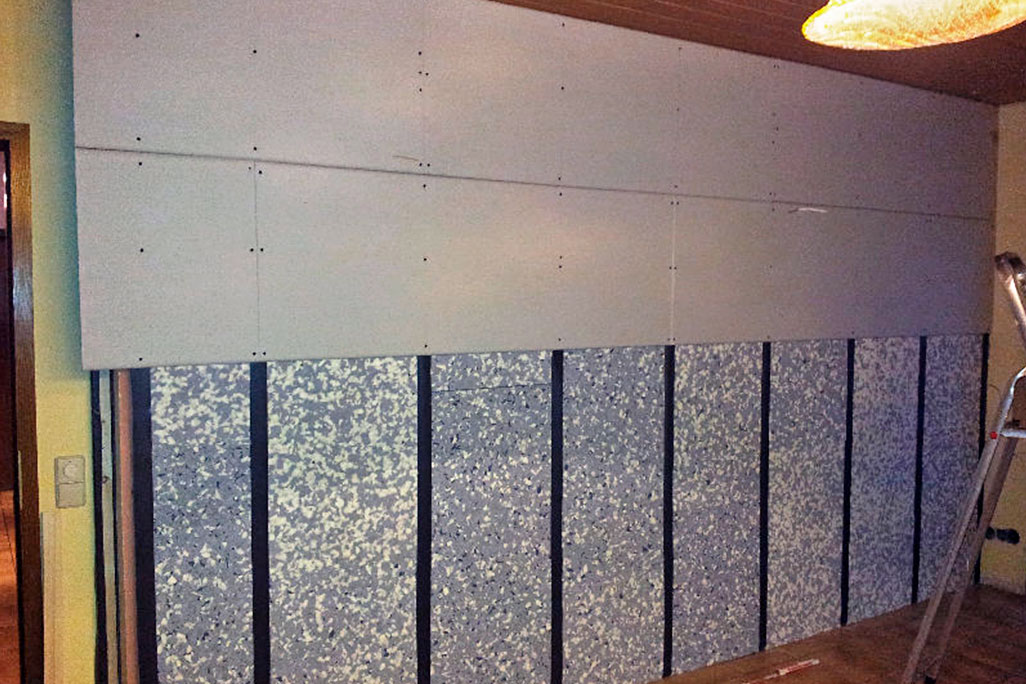
soniflex recommended a cladding system. We glued soni COMPOSITE 32 mm to the wall and fixed wooden battens over it as a kind of framework using 6 cm long screws through the soundproofing panels in the wall, so that we could then fit plasterboard panels on top.

1. The soundproofing measure delivered the desired result. Sound transmission between our semi-detached homes was reduced to a minimum thanks to the cladding and the sound insulation boards. Now we can party longer and louder in our living room without disturbing our neighbours’ peace and quiet. After installing the sound insulation mats, you really can’t hear a thing!

2. We are very satisfied with the quality of the soundproofing panels; the prior consultation with the soniflex team was also very personalised and detailed. Thanks to the craftsmanship of our hard-working helpers, it was a breeze to implement the soundproofing measure.

Soundproofing an apartment

The shared sand-lime brick wall between two maisonette flats needed to be soundproofed against noise from the neighbouring flat (radio/TV, telephone calls, conversations and footsteps). The structural conditions – in particular the spiral staircase – only allowed for a 50 mm thick installation, which is why we used the sound insulation material
 soni COMPOSITE 32 mm and 30 mm battens.

On both the wall side and the plasterboard side, the studs were sealed with soni NBR sealing tape to minimise sound transmission.

Normal everyday noises such as voices, TV and radio are now barely audible.

Soundproofing a bedroom wall against neighbourhood noise
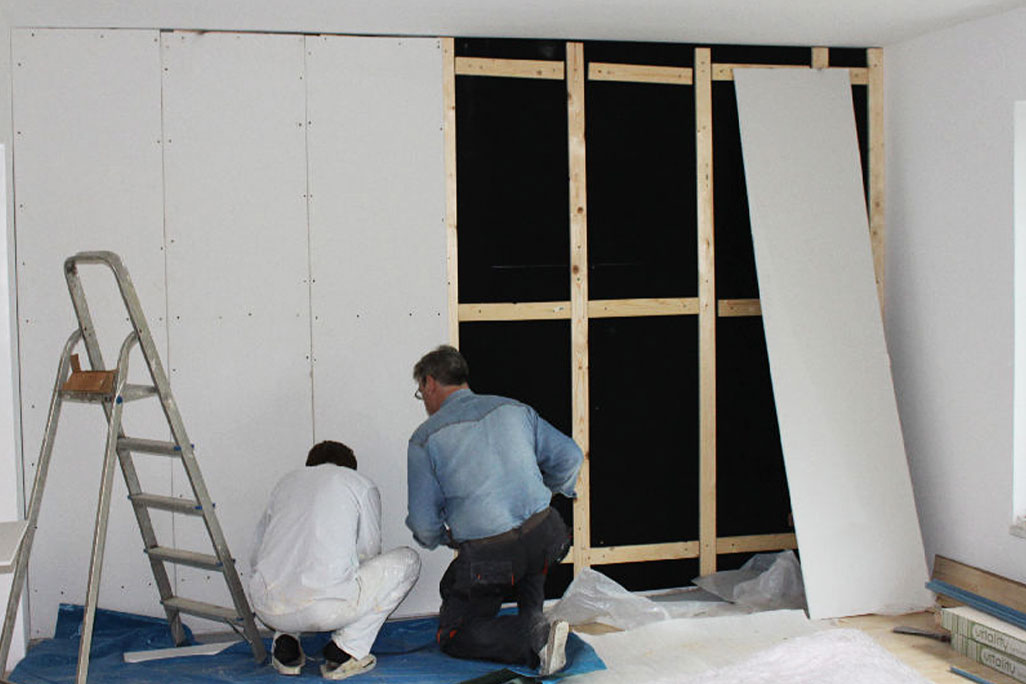
Conversations, the sound of the television, music and laughter from the neighbouring living room were intruding into my bedroom. As the bedroom is not particularly large, too much space would have been lost by installing a false wall. I therefore decided to attach the soni COMPOSITE 52 mm soundproofing mats directly to the existing wall.

As a wall unit covers almost the entire wall and the soundproofing mats cannot therefore come away from the wall, I was able to avoid using additional mechanical fixings for the panels.

Soundproofing an unused interior door in an older building

Using soni PROTECT R soundproofing panels, I soundproofed a redundant interior door between the kitchen and bedroom in an old flat. As it is a rented property, I could not damage the painted door frame or the door itself, so ease of handling during installation – and, above all, removal – of the soundproofing panels was particularly important.

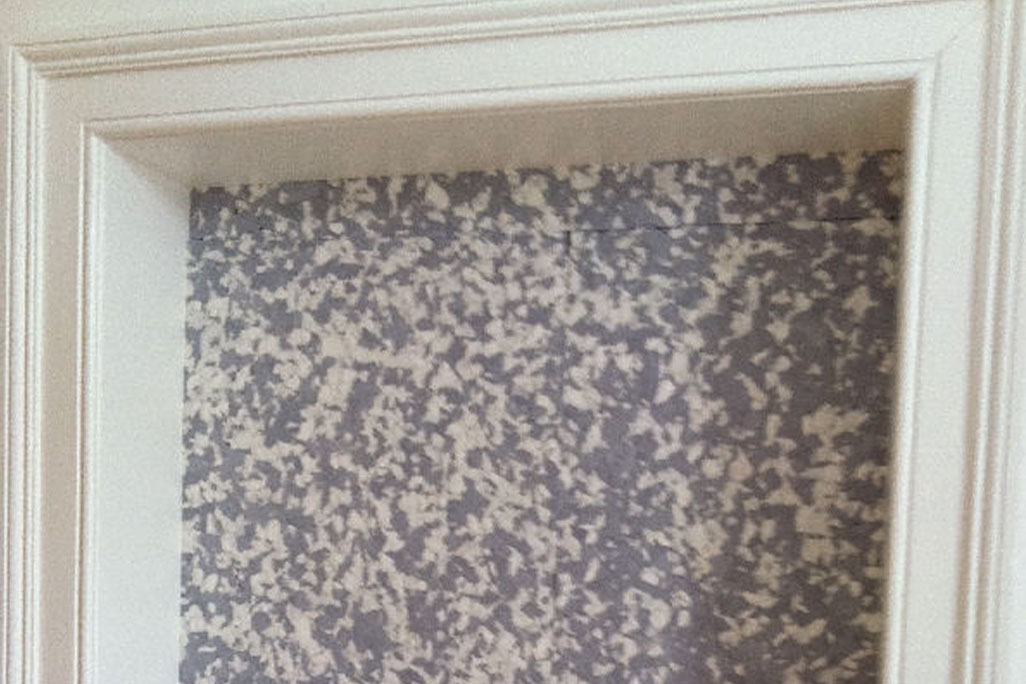
I installed the soni PROTECT R soundproofing panels in a double layer within the door frame. To do this, I cut the acoustic panels slightly larger than the door frame, glued them together using soniflex special adhesive and pressed them into the door frame. Cutting the soundproofing panels was clean, simple and quick using a carpet knife. Fitting the soundproofing material was also a quick job. Noise transmission was not only minimised but, in my case, completely eliminated. The soundproofed door will no longer be visible as it will be concealed by a cupboard placed in front of it.

Note from soniflex06/2024: Our product soni PROTECT R has been replaced by soni 491 STL.

Sound insulation for a door
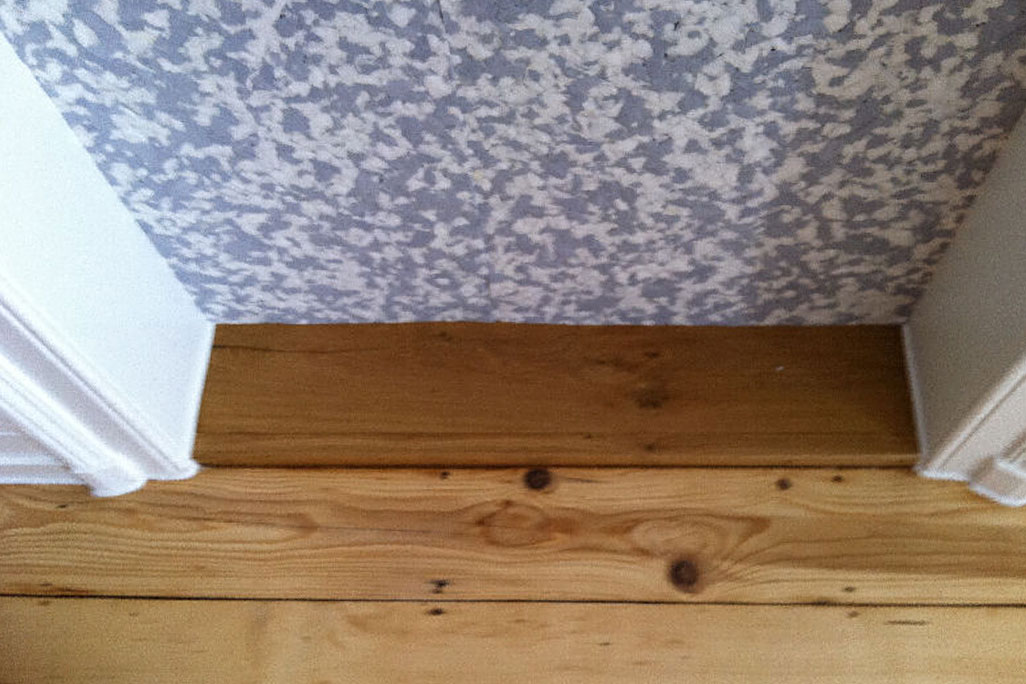
A room door (in the basement of a block of flats), behind which there is a home cinema and music room, needed to be soundproofed.

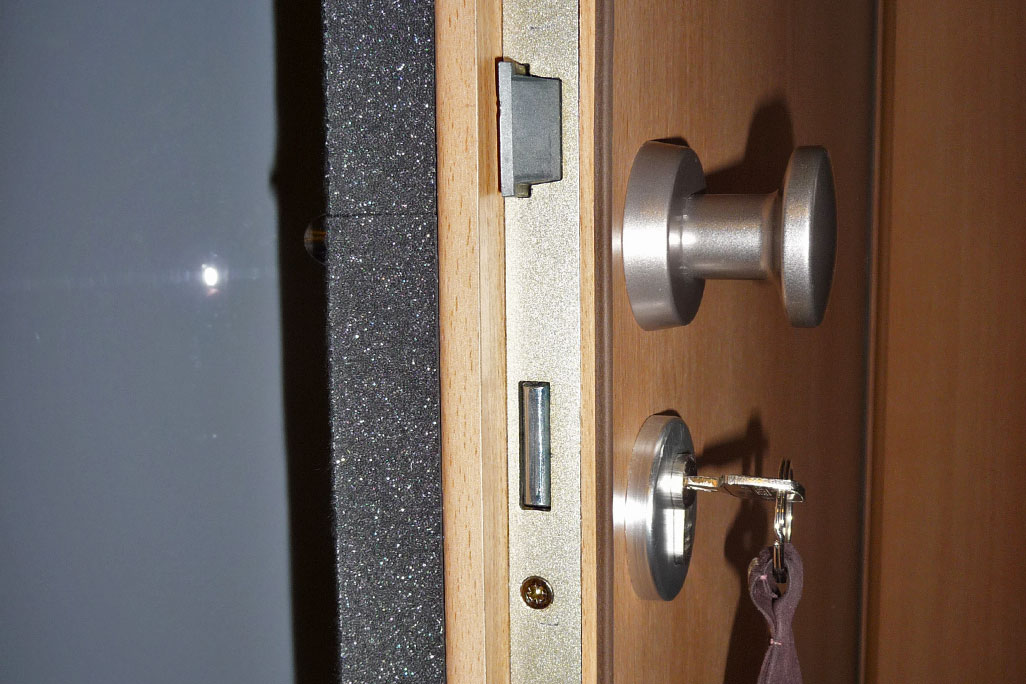
Fitting 32 mm soni COMPOSITE sound insulation panels and installing additional sealing profiles between the door leaf and frame provided excellent sound insulation. Thanks to the high precision of the cut edges of the individual sound insulation panels, it was not necessary to glue the joints. It looks as though it were a continuous surface.

Now I can really enjoy my films without having to worry about the neighbours. They won’t hear a thing.

Finding peace and quiet with noisy neighbours – effective soundproofing for walls and doors

Noisy neighbours, thin walls or noise coming through apartment doors are among the most common causes of stress in the home. Structural soundproofing is often inadequate, particularly in block of flats, older buildings or terraced houses. With soniflex’s soundproofing solutions, disruptive noise can be specifically reduced – either through door insulation with soni PORTA or by retrofitting a cladding panel to the wall.


Which soundproofing solution helps with noise from the neighbouring flat?

The appropriate measure depends on where the noise is coming from:

  • If voices or noises mainly penetrate through the door, door insulation with soni PORTA is usually the quickest and most effective solution.
  • If the noise comes through the wall, we recommend installing a cladding panel for retrofitted sound insulation.

Both solutions can also be combined to significantly increase sound insulation.


What is soni PORTA and what is this door insulation suitable for?

soni PORTA is a special door insulation that is fitted directly onto the door. It reduces sound transmission through thin door leaves and typical sound leaks around the door.

The door insulation is particularly suitable for:

  • Noise from the stairwell
  • Noisy neighbours in the hallway
  • Noise between the living room and bedroom
  • Working from home in apartments with thin walls

soni PORTA can be installed without major structural work and is therefore also suitable for rented flats.


How does a wall lining work to soundproof a wall?

A wall lining is an additional wall structure erected in front of the existing wall. It serves to significantly reduce sound transmission between two rooms or flats.

The typical construction of a wall lining consists of:

  • a timber or metal substructure
  • a combination of heavy foil (increases mass) and soundproofing foam (absorbs sound)
  • an airtight cladding of plasterboard or chipboard

This multi-layered construction dampens and decouples sound waves, so that significantly less noise from the neighbouring flat can be heard.


How effective is a cladding system against neighbourhood noise?

A cladding system installed to professional standards can significantly reduce perceived noise. In particular, voices, televisions, music and everyday noises can be noticeably dampened in this way. It is important to ensure a clean, airtight installation, as even small gaps can reduce its effectiveness.


What noise levels apply in homes?

The following guidelines apply in living spaces:

at night: approx. 35 dB(A)
during the day: approx. 40–50 dB(A)

Persistent noise levels above these values are perceived as disruptive and can impair sleep, concentration and well-being. Soundproofing measures on walls and doors help to reduce this disturbance – regardless of legal regulations.


What are the consequences of constant noise from neighbours?

APersistent neighbourhood noise can lead to:

  • Sleep disturbances
  • Stress and irritability
  • Difficulty concentrating
  • A reduced quality of life

Effective soundproofing is crucial for rest and productivity, particularly in bedrooms and home offices.


What types of noise can be reduced with soundproofing?

Typical sources of noise in residential buildings include:

  • Conversations and voices
  • Television and music
  • Impact noise and everyday sounds
  • Slamming doors and noise from stairwells

By combining door insulation (soni PORTA) with a cladding panel featuring heavy foil and foam, these noises can be specifically and sustainably reduced.

📩 Order the right solution now from the soniflex webshop & make your home quieter!